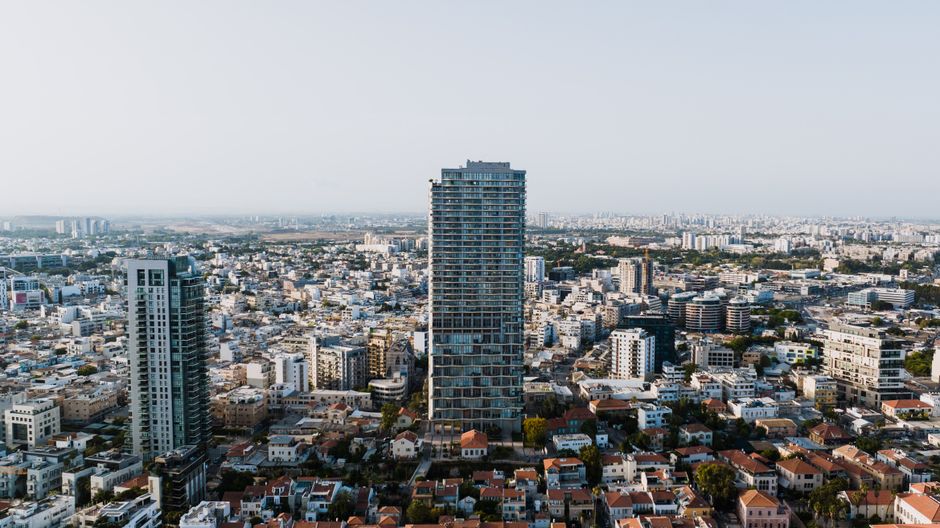
Tel Aviv's municipal imaging archive contains an estimated 340,000 digitised photographs, and a growing share of them are duplicates. The city's Information and Digital Services Directorate has confirmed it is now weighing three competing proposals for how to clean the database—a decision that will shape how residents, architects and heritage researchers access visual records of the city for years to come.
The timing is not accidental. The Tel Aviv-Yafo Municipality committed in its 2024–2027 Digital Transformation Roadmap to have a unified, searchable visual archive operational before the end of 2027. With eighteen months left on that clock, the duplicate problem has moved from a known nuisance to a concrete obstacle. Every redundant image slows retrieval speeds and inflates cloud-storage costs that, according to internal budget documents circulated earlier this year, are already running above projections.
What the Three Proposals Actually Mean
The first proposal, backed by the Jaffa-based non-profit Zikaron Yafo, which has spent five years digitising pre-1948 neighbourhood photographs, calls for a human-review process. Trained archivists would manually flag duplicates before any deletion occurs. Proponents argue this protects against the irreversible loss of images that look identical in metadata but capture subtly different moments—a particular concern for streets like Sheinkin or Rothschild Boulevard, where a single block can appear in hundreds of construction-era frames from different angles.
The second proposal, favoured by the city's technology partner on the project, uses an automated perceptual-hash algorithm to identify near-identical images and batch-delete the lower-resolution copies. This approach could clear the backlog within six to eight weeks. Critics worry it will not distinguish between a true duplicate and a paired before-and-after photograph of, say, a Florentin warehouse conversion—exactly the kind of sequential image pairs urban researchers rely on.
The third path is a hybrid: automated detection followed by a 90-day human review window before permanent deletion. It is the slowest option but has attracted support from the Tel Aviv University urban-history department, whose researchers use the archive regularly through an access agreement signed in March 2023.
The Neighbourhoods With the Most at Stake
The stakes are highest in three areas: the White City, whose Bauhaus-era building stock is covered by a UNESCO World Heritage designation awarded in 2003; the old port district of Namal Tel Aviv, where redevelopment has been continuous since the port's 2001 rehabilitation; and south Tel Aviv's Neve Shaanan neighbourhood, where rapid demographic change over the past decade has made photographic records particularly contested.
The Ir David Foundation, which manages heritage documentation in parts of the broader region, is not directly involved in this process, but the municipal directorate is known to have consulted comparable digitisation projects in Amsterdam and Berlin when drafting its options. Amsterdam's Stadsarchief completed a similar deduplication exercise in 2021 and subsequently reported a 28 percent reduction in its image-retrieval error rate—a figure the Tel Aviv directorate has cited internally as a benchmark.
Budget is also a factor. Cloud storage for the current archive costs the municipality roughly 1.2 million shekels annually. The automated-only proposal promises to cut that figure by as much as a third within the first year. The hybrid model would generate savings more slowly, with full cost benefits not expected until late 2028—a year past the Digital Transformation Roadmap deadline.
The directorate is expected to present its preferred approach to the city's Culture and Digital Affairs Committee in September 2026. If the committee approves a proposal that month, procurement for any new software or archival staffing would need to begin by November to stay on schedule. Researchers who depend on the archive—including graduate students at Tel Aviv University's Department of Geography and the Human Environment—have until the end of July to submit formal feedback through the municipality's public-consultation portal. The portal address is listed on the Tel Aviv-Yafo Municipality website under the Digital Services section. Missing that window means waiting for whatever the committee decides, with no further public input guaranteed before implementation begins.