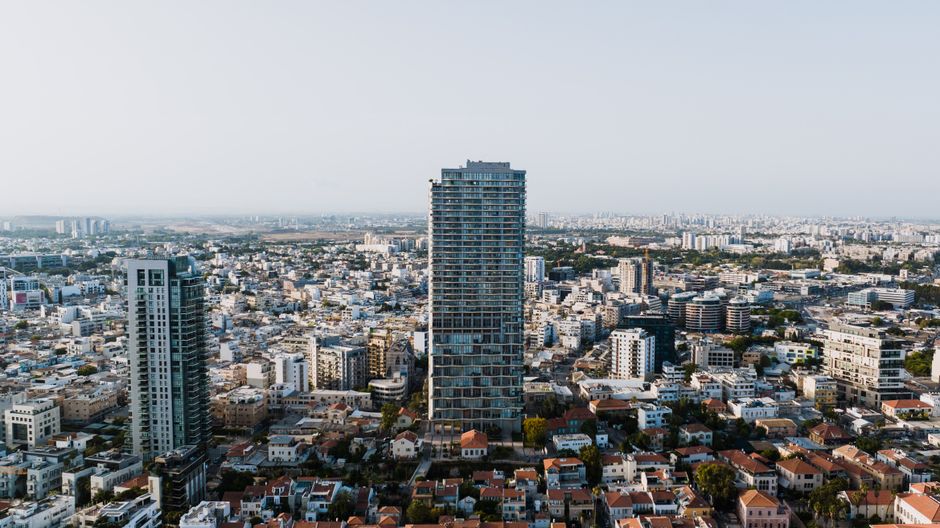
Tel Aviv's municipal land registry is sitting on a problem that predates the smartphone, the internet, and in some cases the state itself. Duplicate property images — identical or near-identical cadastral records filed for the same parcel under different reference numbers — have tangled title searches across dozens of neighborhoods, from the older rental blocks of Florentine to the tower developments creeping up along Begin Road in the north. The Tel Aviv District Land Registry office, operating under the Israel Land Authority, confirmed last year that the backlog of disputed image files runs to several hundred open cases.
The issue matters now because Tel Aviv's residential market never slowed down long enough for anyone to fix it. Between 2015 and 2024, the municipality approved more than 80,000 new residential units under successive urban renewal programs, including the flagship Tama 38 earthquake-reinforcement scheme and its successor, Pinui-Binui demolish-and-rebuild projects. Each approval cycle generated new cadastral drawings. Each drawing had to be reconciled against an archive that, for large stretches of the twentieth century, was maintained on paper forms — forms that were later scanned, sometimes twice, sometimes under different file codes.
Roots in the British Mandate and the State's First Cadastral Survey
The structural origin of duplicate images goes back to 1928, when the British Mandate administration in Palestine launched its first systematic land survey. That survey produced the tabu — the Ottoman-era land register that Israel inherited at independence in 1948. The new state's cadastral office began converting tabu records into a modernised system, but the conversion was incremental and under-resourced. Parcels in fast-growing Tel Aviv suburbs were surveyed multiple times as boundary lines shifted with each development wave. The Neve Tzedek neighborhood, for instance, whose lots were originally registered under Ottoman grant deeds, went through at least three separate re-surveys before a unified block map was settled in the 1970s.
Digital scanning of paper files began in earnest at the Tel Aviv Land Registry in the late 1990s. By 2004 the registry had digitised roughly 60 percent of its active holdings, according to figures published by the Justice Ministry's Land Registration Administration. The problem was that the scanning operation was split between two contractors working from different originals — some from the registry's own archive, some from municipal planning department copies. Where both sources existed for the same parcel, the system sometimes created two electronic images rather than one consolidated record.
What Buyers and Developers Are Running Into Today
For buyers, a duplicate image surfaces most visibly at the mortgage stage. Bank Hapoalim and Bank Leumi, the two largest mortgage lenders in the country, both require a clean title extract — a nesach tabu — before they will issue a loan commitment. When a search returns two image records for the same apartment, the bank's legal department typically freezes the file pending clarification. That clarification can take anywhere from six weeks to over a year, depending on whether the discrepancy requires a fresh survey or only an administrative correction at the registry branch on Menachem Begin Road, near the Azrieli Center.
Urban renewal projects have sharpened the exposure. Under Pinui-Binui terms, a developer acquires rights to an entire building from the existing tenants, demolishes it, and rebuilds at higher density. In 2023 alone, the Tel Aviv municipality registered 47 new Pinui-Binui agreements, each requiring clear cadastral standing for every unit in the old structure. Duplicate images in even one apartment within a building can technically freeze the entire project while attorneys petition the registry to consolidate records.
The Justice Ministry published a corrective procedure in March 2025 that allows registry officials to merge duplicate files administratively, without requiring a court order, provided both images originate from the same original survey drawing. Attorneys practicing property law in Tel Aviv say the procedure has cleared a portion of the backlog, though cases where the two images diverge on boundary measurements still require a licensed surveyor's report and a hearing before a registrar.
Homeowners who suspect their property may carry a duplicate record should request a full historical extract — not just a current nesach tabu — from the Tel Aviv District Land Registry branch. The historical extract shows every image number ever associated with a parcel. Buyers entering contracts in Florentine, the old port area of Jaffa, or any pre-1970s building stock in central Tel Aviv are advised by practitioners to commission that check before signing heads of agreement, not after.