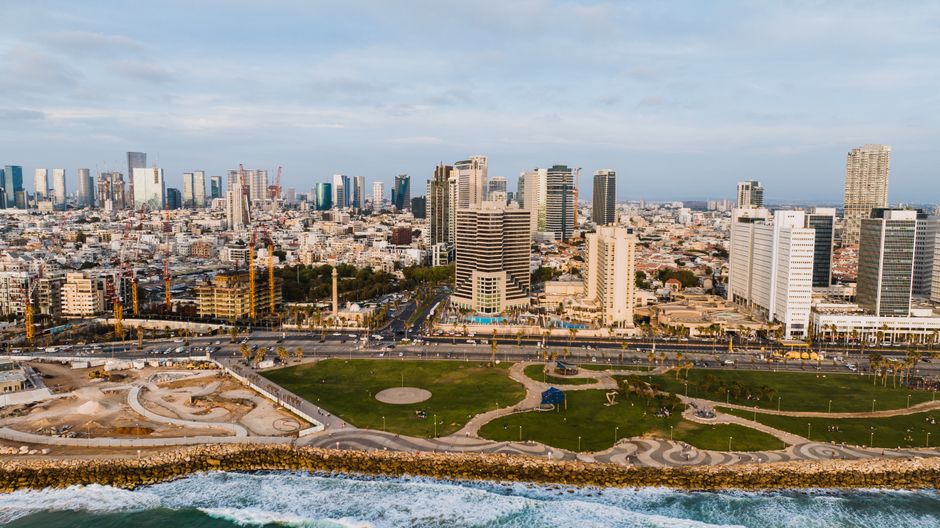
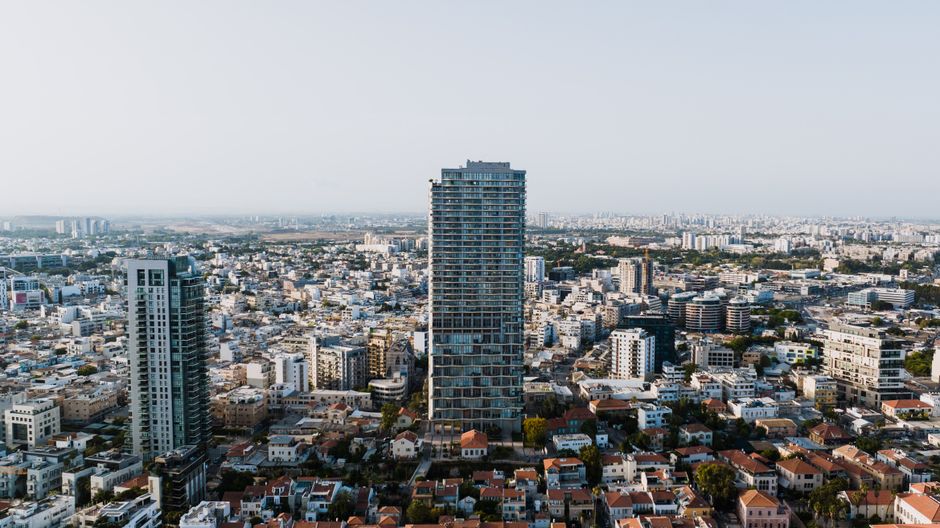
Tel Aviv's municipal planning division is facing a reckoning over duplicate imagery saturating the city's public infrastructure. From the light-rail corridor running through Ibn Gabirol Street to the renovated promenade stretching along the Herbert Samuel Esplanade, the same stock photographs, recycled graphic panels and near-identical signage installations have appeared repeatedly across city-funded projects — raising pointed questions about procurement standards, creative oversight and the public money spent getting things wrong twice.
The issue isn't cosmetic. Tel Aviv allocates a portion of its urban development budget to public art and visual communication under the municipal beautification framework, and when duplicate images slip through procurement — whether through contractor error, insufficient briefing documents or overlapping vendor contracts — the city is legally and financially obligated to replace them. That replacement process, currently under review by the Tel Aviv-Yafo Municipality's urban design unit, now stands at a crossroads.
Where the Decisions Are Being Made
Two bodies hold the most immediate influence over what happens next. The Tel Aviv-Yafo Municipality's Committee for Planning and Construction, which meets on a quarterly cycle, is expected to take up revised procurement guidelines for visual materials before its September 2026 session. Separately, the Bauhaus Center Tel Aviv on Dizengoff Street — long a civic reference point for design standards in the White City — has been informally consulted on best-practice frameworks, though no formal advisory role has been confirmed.
The Florentin neighbourhood offers the sharpest local example of how the problem compounds. Several street-level graphic installations along Vital Street and the surrounding blocks were identified in a 2025 internal audit as containing images already deployed in the Neve Tzedek cultural quarter, less than a kilometre away. The audit, conducted by the municipality's engineering and infrastructure directorate, flagged at least eleven panel installations for review. Contractors involved have contested some findings, and no final determination has been published as of today, July 4, 2026.
Procurement records reviewed by The Daily Tel Aviv show that individual graphic panel installations in city-funded streetscape projects have been priced between 4,500 and 12,000 shekels per unit, depending on size and materials. Replacing a single installation doesn't sound ruinous in isolation. Multiply that across eleven flagged panels, add administrative costs and potential contractor disputes, and the bill climbs quickly past six figures — before any redesign fees are counted.
The Fork in the Road
Planners have three realistic options in front of them, each with a different risk profile. The first is a centralised image registry — a shared digital database of all visuals already deployed across municipal projects, mandatory for any contractor bidding on public-space work. Several European cities including Amsterdam and Vienna have operated versions of such registries for over a decade. Tel Aviv has studied the model but not adopted it.
The second option is stricter contract language requiring vendors to certify image uniqueness before installation, with financial penalties for duplication. This shifts liability but doesn't guarantee early detection. The third, and most ambitious, is a standing design review panel with teeth — a body empowered to halt installations mid-project if duplication is detected, rather than flagging problems after the fact.
The September committee session will likely not resolve everything at once. What it can do is establish which of these mechanisms gets piloted first, and in which part of the city. The Rothschild Boulevard corridor, currently undergoing a phased streetscape upgrade, has been mentioned internally as a candidate for any pilot program, given its visibility and the number of contractors already active there.
Neighbourhood associations in Lev Ha'ir — the central precinct bounded roughly by Allenby Street to the south and Arlozorov Street to the north — have submitted written comments to the municipality urging faster action. Their core argument: duplicated imagery doesn't just look careless, it undermines the sense that different parts of Tel Aviv have distinct visual characters worth preserving. That argument is likely to carry weight as the committee begins deliberations. What it produces remains the question.