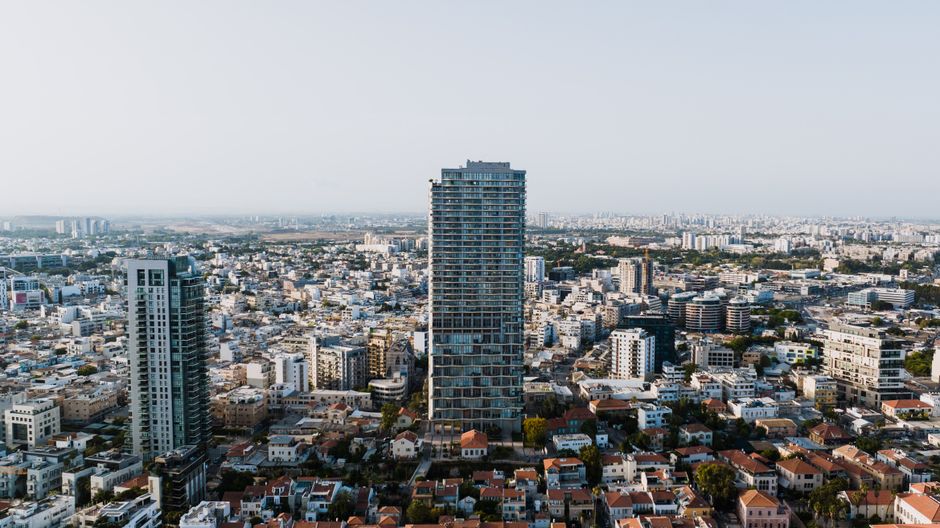
Tel Aviv's municipal GIS division has been working since early 2025 to purge thousands of duplicate images from the city's urban planning and permit databases, a sprawling digital housekeeping effort that touches everything from building inspection records in Florentin to street-level documentation along Rothschild Boulevard. The problem is older than most residents realise: years of scanning, re-uploading, and inter-departmental file transfers left the city's spatial data repositories clogged with redundant files that slow processing times and, in some cases, have caused planning officers to inadvertently review the same property photograph twice during permit approvals.
Why does this matter right now? Several factors are converging. Tel Aviv's smart city initiative, operating under the municipality's Digital Tel Aviv framework, has accelerated integration of visual data across departments. At the same time, the city is digitising decades of paper records held at the Tel Aviv-Jaffa Municipality building on Ibn Gabirol Street. Feeding analogue archives into digital systems without a deduplication protocol in place is, according to information management professionals familiar with similar projects, a reliable way to multiply the problem exponentially. The urgency is real: without systematic culling, storage costs climb and the integrity of planning decisions becomes harder to audit.
On the ground, two organisations are central to Tel Aviv's response. The Tel Aviv Digital Lab, based in the Sarona compound, has been piloting a machine-learning deduplication tool since the third quarter of 2025, testing it against image sets drawn from the city's Nof Tel Aviv urban renewal project documentation. Separately, the municipal library and archive network — which includes the Beit Ariela cultural centre on Shaul Hamelech Boulevard — has been running a parallel effort focused on historical photographic collections, some dating to the British Mandate period, where near-identical prints were duplicated across multiple donated collections over the decades.
How Tel Aviv Compares to Amsterdam and Seoul
The challenge is not unique to Tel Aviv. Amsterdam's municipality began a structured deduplication programme for its spatial data infrastructure in 2023, backed by a dedicated budget line inside the city's Digitale Stad agenda. Seoul's Smart City Division, operating out of the Digital Innovation Bureau, completed a first-pass automated deduplication of its public CCTV and urban imagery archive in late 2024, reportedly reducing redundant file counts in that dataset by roughly 34 percent, according to reporting by South Korean technology publication ZDNet Korea. Tel Aviv's effort is running later and, by the municipality's own internal timelines shared at a public planning committee session in March 2026, is not expected to reach full-database coverage until mid-2027.
Where Tel Aviv diverges from both Amsterdam and Seoul is in the fragmentation of its data governance. Amsterdam consolidated image management under a single chief data officer role in 2022. Seoul's deduplication push was driven top-down from a centralised bureau. In Tel Aviv, responsibility is split across at least four departments — urban planning, heritage preservation, the digital lab, and general IT infrastructure — and coordination between them has been, by the account of planning committee minutes from January 2026, inconsistent. The Florentin neighbourhood rezoning process, for instance, involved image datasets handled by two separate departments that had not reconciled their deduplication protocols before the review commenced.
What Comes Next for Residents and Developers
Practically, the deduplication effort matters most to anyone filing a building permit or a heritage objection in the city. Duplicate images in a planning file can trigger review delays of days or, in complex cases, weeks, as officers must manually confirm which version of a photograph is current and which is an older copy. The Tel Aviv Digital Lab has indicated it plans to expand its pilot tool citywide by the first quarter of 2027, pending a budget allocation expected to come before the city council later this year.
Residents dealing with permit processes in high-churn neighbourhoods like the Lev Tel Aviv district or along the HaYarkon Street seafront corridor are advised by the municipality to request a file audit before submitting large documentation packages, to avoid feeding duplicates back into the system. The broader lesson from Amsterdam and Seoul is that deduplication is not a one-time fix — it requires an ongoing governance structure. Tel Aviv is still building that structure, one committee session at a time.