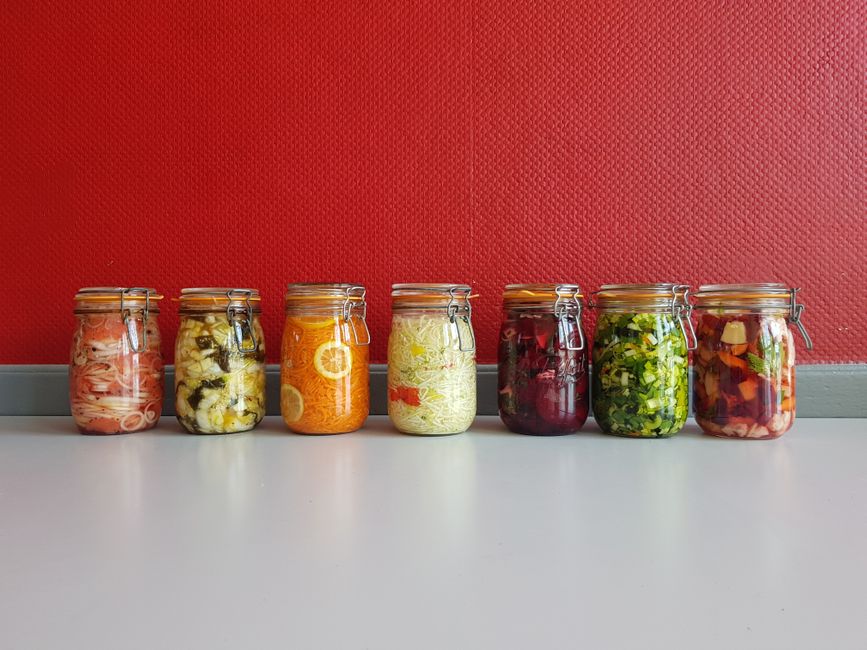
The science is no longer fringe. A healthy gut microbiome — the roughly 38 trillion bacteria living in your digestive tract — is now linked by peer-reviewed research to everything from immune function and mood regulation to cardiovascular health. And Tel Aviv, with its Mediterranean diet heritage and thriving fermentation cottage industry, happens to be exceptionally well-stocked for anyone who wants to eat their way to better gut health.
The timing is pointed. Interest in fermented foods has surged globally since 2020, partly driven by post-pandemic anxiety about immunity and partly by a wave of accessible microbiome research coming out of institutions like the Weizmann Institute of Science in Rehovot, whose nutrition studies have attracted international attention for personalising dietary advice based on individual gut bacteria profiles. That research has filtered into everyday Israeli food culture faster than almost anywhere else — you can feel it in how Shuk HaCarmel vendors talk about their products now.
What to Buy and Where to Find It
Start at Shuk HaCarmel, Tel Aviv's oldest and most chaotic open-air market running along Hacarmel Street in the city centre. The pickle stalls near the southern end — particularly around the junction with Mane Street — sell traditional Israeli-style lacto-fermented cucumbers, turnips tinted pink with beetroot, and whole fermented cauliflower heads. These are not vinegar pickles. They are the real thing: vegetables submerged in brine and left to ferment naturally, producing live Lactobacillus cultures. A half-kilogram bag runs roughly 12–18 shekels depending on the vendor and season.
For dairy-based fermentation, the local supermarket chain Shufersal stocks at least four brands of kefir — a fermented milk drink with bacterial diversity that typically exceeds what you find in standard yoghurt. Tnuva's kefir, widely available, contains multiple probiotic strains and retails for around 8–10 shekels per 500ml. But the more interesting option sits at HaTachana (the Old Railway Station complex in Neve Tzedek neighbourhood), where a handful of artisan food vendors sell small-batch leben and labneh made from locally sourced sheep's milk. The labneh, strained overnight and rolled in za'atar, delivers both probiotic bacteria and prebiotic herbs — essentially feeding your gut bugs while introducing new ones.
Kombucha has its own Tel Aviv ecosystem. The brand Buch & Brew, which operates out of a production space in the Florentin neighbourhood and sells through multiple health-food shops along Ibn Gavirol Street, produces a dry-style kombucha using SCOBY cultures that have been maintained continuously since the company's founding in 2019. A 330ml bottle costs approximately 18–22 shekels. Tempeh — fermented soy, less common but high in gut-supporting fibre and bacteria — can be sourced from Organic Market branches, including the one on Ben Yehuda Street near the beachfront promenade.
The Evidence Behind the Trend
A 2021 randomised controlled trial published in the journal Cell by researchers at Stanford University found that a diet high in fermented foods increased microbiome diversity and decreased 19 inflammatory proteins over a ten-week period. The comparison group, eating a high-fibre diet, did not see the same immune benefit — a finding that surprised many gut health researchers and accelerated mainstream interest in fermentation specifically, not just dietary fibre broadly.
The Weizmann Institute's own Personalized Nutrition Project, running since 2015, has produced data from over 1,000 Israeli participants showing that two people eating identical foods can have wildly different blood-sugar and inflammatory responses depending on their gut bacteria composition. That research suggests the best gut-health strategy is both diverse and consistent: introducing fermented foods regularly rather than in occasional bursts.
Practically speaking, nutritionists at the Tel Aviv Sourasky Medical Center (Ichilov Hospital) generally advise starting slowly — one or two fermented foods per day — to avoid the bloating and digestive adjustment that can accompany a sudden microbiome shift. Build up over two to three weeks. Focus on variety: a rotation of kefir, lacto-fermented vegetables, and one fermented soy or tea-based product covers meaningfully different bacterial families. The Shuk, Florentin, and Ben Yehuda strip between them make that rotation entirely possible without leaving the city. Consult a registered dietitian or your local GP before making significant dietary changes, particularly if you have an existing digestive condition.