Property
Cranes vs. Community: The Fight Over Tel Aviv's Building Boom
A planned 40-storey tower on HaYarkon Street has reignited a city-wide debate about who Tel Aviv's explosive development actually serves.
4 min read
Property
A planned 40-storey tower on HaYarkon Street has reignited a city-wide debate about who Tel Aviv's explosive development actually serves.
4 min read
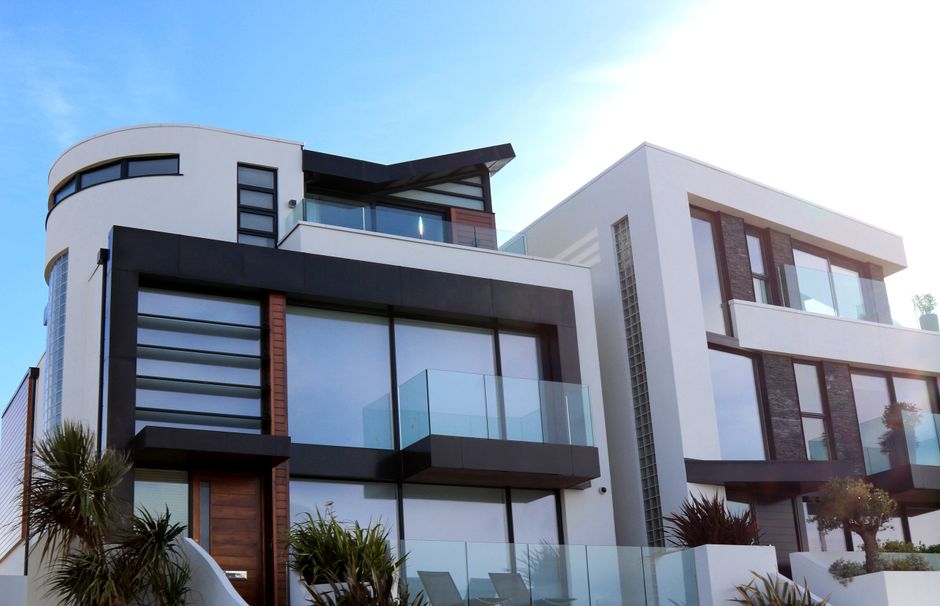
The Tel Aviv Local Planning and Building Committee approved, in a 7-4 vote last Tuesday, a 40-storey mixed-use tower at the northern end of HaYarkon Street, just south of the Charles Clore Park beachfront. Residents of the adjacent Lev HaIr neighbourhood had submitted 340 formal objections. The committee approved it anyway.
The decision lands at a combustible moment. Tel Aviv's average apartment price hit 4.2 million shekels in the first quarter of 2026, according to the Central Bureau of Statistics, a 9 percent rise year-on-year. The national government's Mehir LaMishtaken subsidised housing programme has stalled in the city, delivering fewer than 800 units against a promised 3,500 by the end of 2025. Housing Minister Yitzhak Goldknopf announced in May that urban densification — towers, not suburbs — is now the official answer to the shortage. That political context is everything. Every rejected permit carries a political cost; every approved one carries a human one.
Opposition in Lev HaIr is not simply nimbyism, though critics on the pro-development side use that word freely. The Lev HaIr Community Forum, which has operated out of a small office on Bialik Street since 2011, argues the tower will cast shadow over the Meidan HaBima plaza for four months of the year and funnel construction traffic through Dizengoff Street's already-gridlocked southern section. They also cite a 2024 Technion study estimating that buildings above 25 storeys in Tel Aviv's coastal zone reduce pedestrian wind comfort by up to 34 percent during summer months — a real quality-of-life figure in a city where outdoor life is the product.
Their deeper argument is structural. Tel Aviv approved 67 towers above 20 storeys between 2020 and 2025, yet median rents in the Florentin and Neve Tzedek neighbourhoods rose 22 percent over the same period, according to Madlan property data published in April 2026. New supply, residents say, is not filtering down to ordinary renters. It is being absorbed by investors and short-term rental platforms, with Airbnb-listed units in the Tel Aviv city boundary now exceeding 11,000.
The project's developer, Amot Investments, points to a calculus the municipality itself endorses. Tel Aviv's population is projected to reach 500,000 by 2035, up from roughly 460,000 today. The city has virtually no undeveloped land. The HaYarkon tower, Amot says, will deliver 280 apartments, 40 of which are designated affordable units under the city's Pinui-Binui urban renewal framework. It will also include 2,000 square metres of public commercial space at street level — a genuine contribution to a neighbourhood that lost three cafes and a pharmacy to pandemic-era closures and never replaced them.
Tel Aviv's chief architect, writing in the committee's approval document, noted that the alternative to vertical density is sprawl into satellite cities — Petah Tikva, Rishon LeZion, Bat Yam — which adds car dependency and strains the Ayalon Highway corridor further. The city's own 2040 Master Plan, published in 2023, designates the northern HaYarkon strip as a priority densification zone. Opponents knew this was coming; they dispute whether the process of community consultation was genuine rather than cosmetic.
That procedural complaint now has legal legs. The Lev HaIr Forum filed for an administrative review with the National Infrastructure Committee on Thursday, arguing the environmental impact assessment did not adequately model cumulative shadow effects from three other approved towers within 400 metres of the site. Legal proceedings typically pause construction starts by six to eighteen months in Israel's planning courts.
For anyone watching a Tel Aviv property purchase or rental decision, the practical read is this: supply is moving upward, slowly and litigiously. Buyers in Lev HaIr and the Yad Eliyahu district south of the planned Shaul HaMelech Boulevard extension should factor planning uncertainty into valuations. Tenants renewing leases in 2026 have little leverage while the pipeline remains contested. The committee's next session, scheduled for September 2, has eight further tower applications on its agenda.

Property

Property

Property
Property
About this article
Published by The Daily Tel Aviv
Spread the word
Daily brief
Free, in your inbox before 7am. Weekdays.
The Daily Network — local news across Australia