community
Tel Aviv Red Line cuts travel times but ridership lags
Two years after opening, the light rail has sharply reduced journey times while passenger numbers trail forecasts.
Listen in English · 3 min
How we reported this
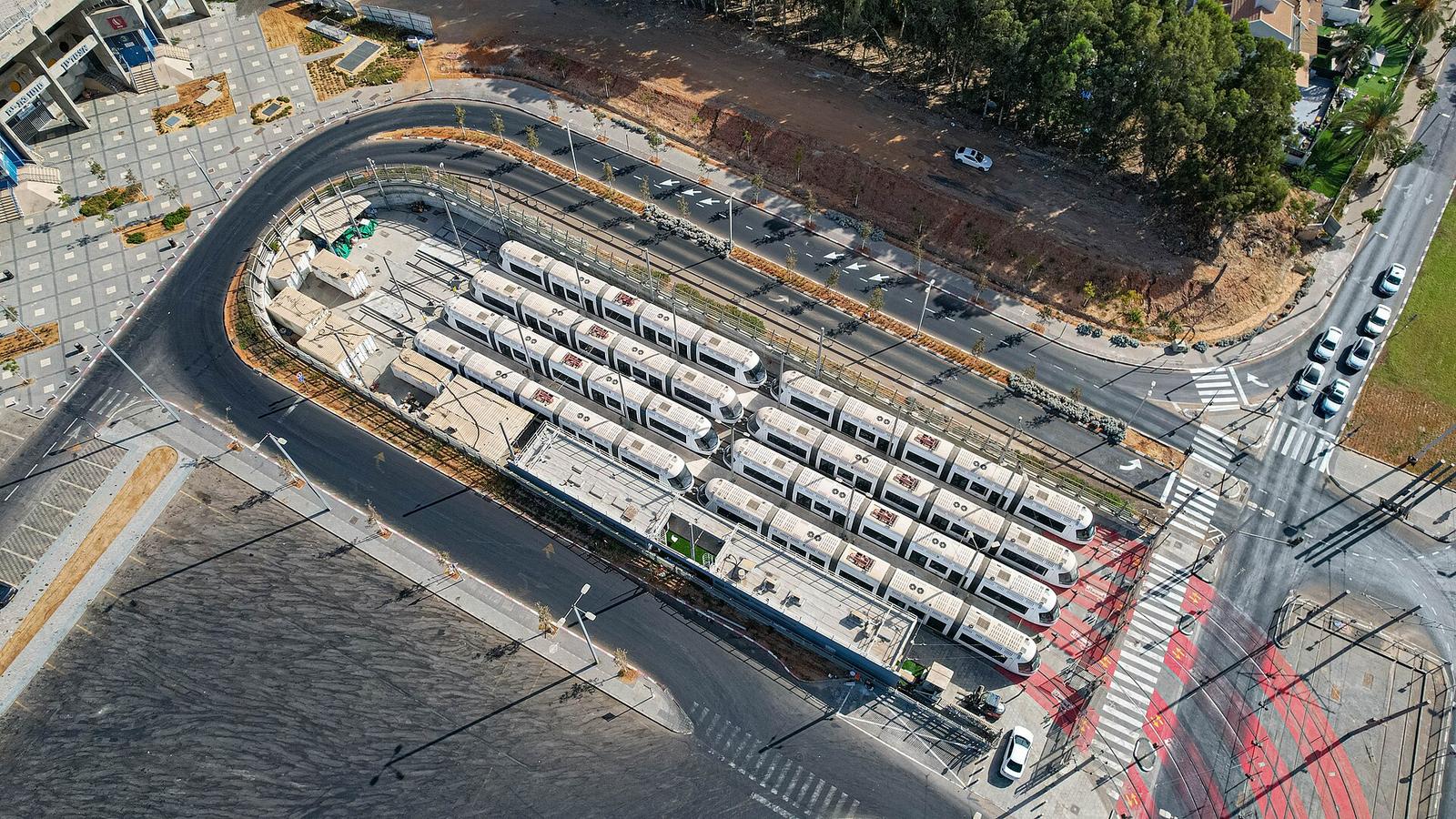
Two years after the Tel Aviv light rail Red Line began operating, the system has sharply reduced travel times across the metropolitan area even as passenger numbers remain below the original forecasts, Globes reports. The line, part of which runs underground, opened in August 2023 after almost a decade of construction and repeated delays.
According to the reporting, the clearest success has been journey times. An end-to-end trip on the R1 route, which runs from Bat Yam through Jaffa, Tel Aviv, Ramat Gan and Bnei Brak to the central station in Petah Tikva, has fallen from about 90 minutes when the line opened to roughly 65 minutes. On the underground R3 route, times have come down from about 30 minutes to 23 minutes.
The difference lies in the route itself. Unlike most light rail systems that run mainly at street level, the Red Line combines above-ground running in Bat Yam and Jaffa with tunnels through Tel Aviv, Ramat Gan and Bnei Brak, before partially returning to the surface in Petah Tikva. Globes notes that the underground sections are considerably faster, so travel in the tunnelled core is quick while the surface stretch in Bat Yam remains slow.
Ridership, however, has trailed expectations. Globes reports that daily passenger numbers have fluctuated around 110,000 to 120,000, well short of the original forecast of about 238,000, with demand strong in Tel Aviv but weaker in Bat Yam and Petah Tikva. Reliability has been high, with the operator reporting that the large majority of planned journeys have been completed and punctuality has stayed strong over the past year.
A significant obstacle has been getting people to the stations. According to the report, while Tel Aviv prepared for the line with bicycle paths and feeder routes, complementary bus connections in some neighbouring areas have lagged, and only a small share of passengers transfer to the train from buses or Israel Railways. Transport advocates have pointed to the need to upgrade feeder services, particularly in Holon and south-east Tel Aviv.
The Red Line is the first of several planned light rail and metro routes intended to reshape mobility across greater Tel Aviv. Its experience so far suggests that the network's full potential will only be realised as additional lines open and as connections between the train and other modes of transport improve across the metropolitan region.
Sources: globes.co.il.