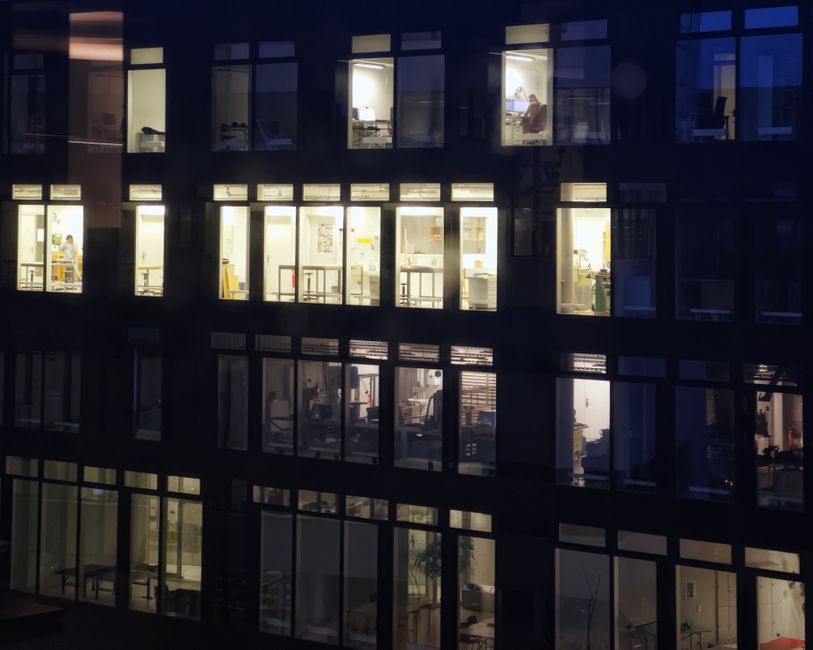
Vacancy rates in Tel Aviv's central business district dropped to 11.3 percent in the second quarter of 2026, the lowest reading since early 2022, according to figures compiled by Cushman & Wakefield Israel. That single number is driving a wave of cautious optimism among landlords, brokers and the institutional investors who had been sitting on the sidelines since the post-October 2023 shock rippled through the market.
The timing matters. With Ayatollah Khamenei's funeral drawing enormous crowds in Tehran this week, regional geopolitical risk has rarely felt more present. Yet Tel Aviv's commercial property market is behaving as if it has already priced in the uncertainty and moved on. Deals that stalled in late 2024 are closing. Construction cranes have returned to Rothschild Boulevard. The question serious investors are now asking is not whether the recovery is real, but which pockets of the city will capture the gains and which will be left behind.
Where the Money Is Going
The clearest signal is in the Azrieli Sarona Tower complex on Begin Road, where asking rents for Grade A space reached approximately 140 shekels per square metre per month in June 2026 — a 9 percent rise year-on-year. Across town in the Ramat HaChayal technology cluster, sometimes called Silicon Wadi's corporate spine, rents are running closer to 115 shekels per square metre, reflecting a market that rewards prestige address above almost everything else.
Foreign capital is back in the mix. Several European family offices and at least two North American pension funds with exposure to Israeli tech through equity have been diversifying into bricks and mortar, viewing long-lease office assets as a hedge against shekel volatility. The Bank of Israel's benchmark interest rate, held at 4.5 percent through the first half of 2026, has kept financing costs elevated but not prohibitive for buyers with low leverage. Local developer Amot Investments reported a 22 percent increase in signed lease agreements during the first five months of the year compared with the same period in 2025.
Not every neighbourhood is sharing the upside. The older stock along HaYarkon Street north of the city centre — mid-century office blocks that were never retrofitted for fibre-dense tech tenants — is sitting at vacancy above 24 percent. Building owners there face a hard choice: spend heavily on upgrades or convert to mixed-use residential, a path that requires navigating Tel Aviv Municipality's still-evolving zoning frameworks under the city's Metropolitan Outline Plan.
Reading the Indicators Carefully
Three metrics deserve particular attention from investors trying to separate signal from noise. First, net absorption — the difference between new leases signed and space returned to market — turned positive for the first time in seven quarters during Q1 2026. Second, pre-leasing activity on projects under construction in the Lev Tel Aviv district and the new towers adjacent to HaHagana train station suggests developer confidence is running well ahead of current occupancy data. Third, the spread between prime and secondary rents has widened to roughly 30 shekels per square metre, the largest gap in a decade, which historically precedes either a secondary-market correction or a wave of repositioning investment.
The tech sector — still the dominant office tenant in Tel Aviv, accounting for an estimated 58 percent of total occupied Grade A space — is absorbing more square footage than at any point since 2021. Several cybersecurity firms that had shifted to fully remote operations are signing hybrid-model leases, typically for smaller footprints but longer terms of seven to ten years, which gives landlords the income visibility they need to refinance.
For investors deciding where to deploy capital in the second half of 2026, the practical read is this: prime assets in Sarona, Rothschild and the new HaHagana corridor will likely hold value even if the broader economy softens. Secondary stock north of the centre and in older Ramat Gan overspill zones carries meaningful downside without a clear repositioning thesis. The absorption data is encouraging, but at 140 shekels per square metre for the best space in the city, Tel Aviv is no longer cheap — and buyers who arrive late to this cycle will need to be precise about where they sit in the stack.